
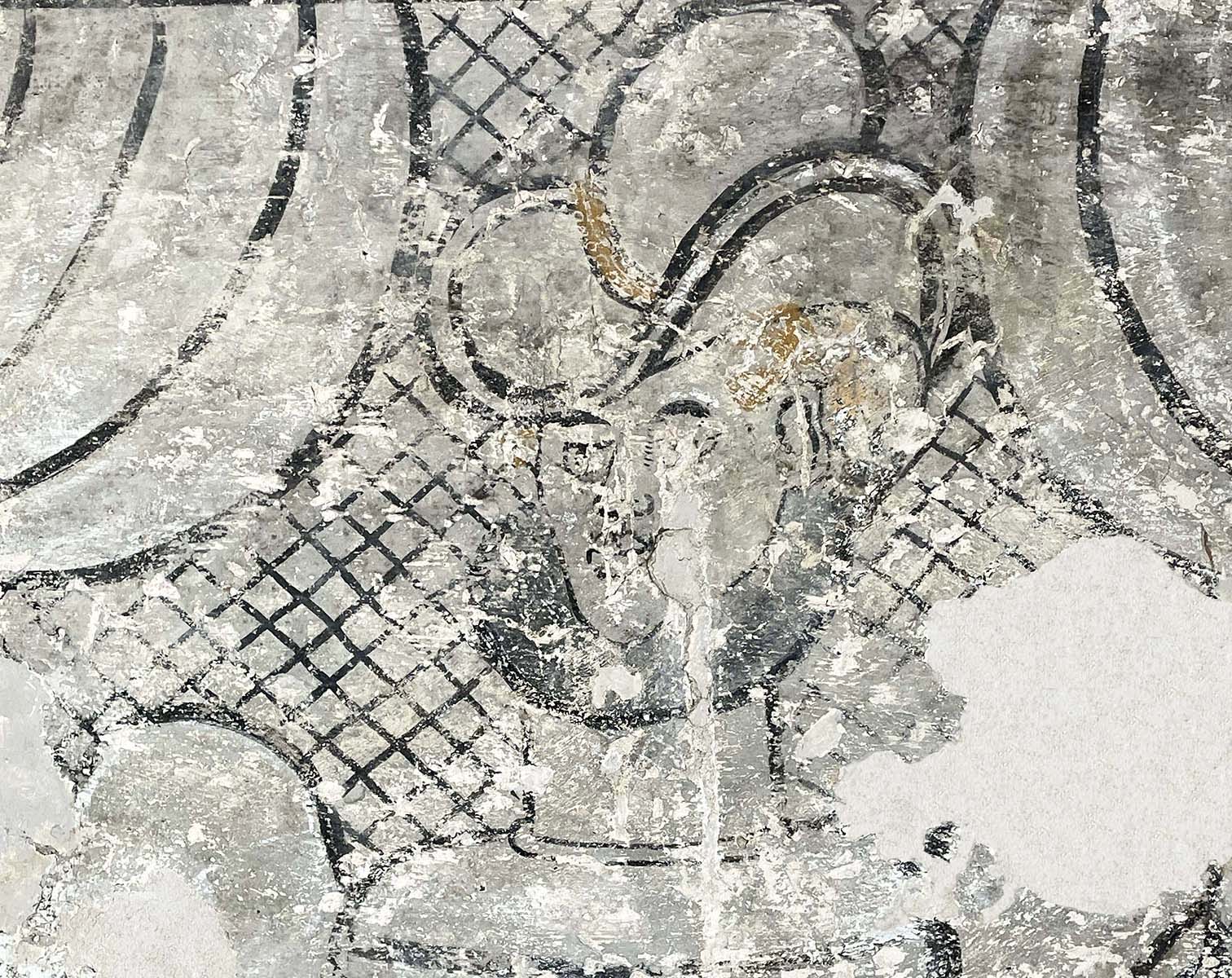
Dating to the 1590s, this scheme, which survives in a Grade II listed building in Evesham, is a remarkably complete example of vernacular domestic wall painting of the period. It is likely to have been executed shortly after the building’s construction.
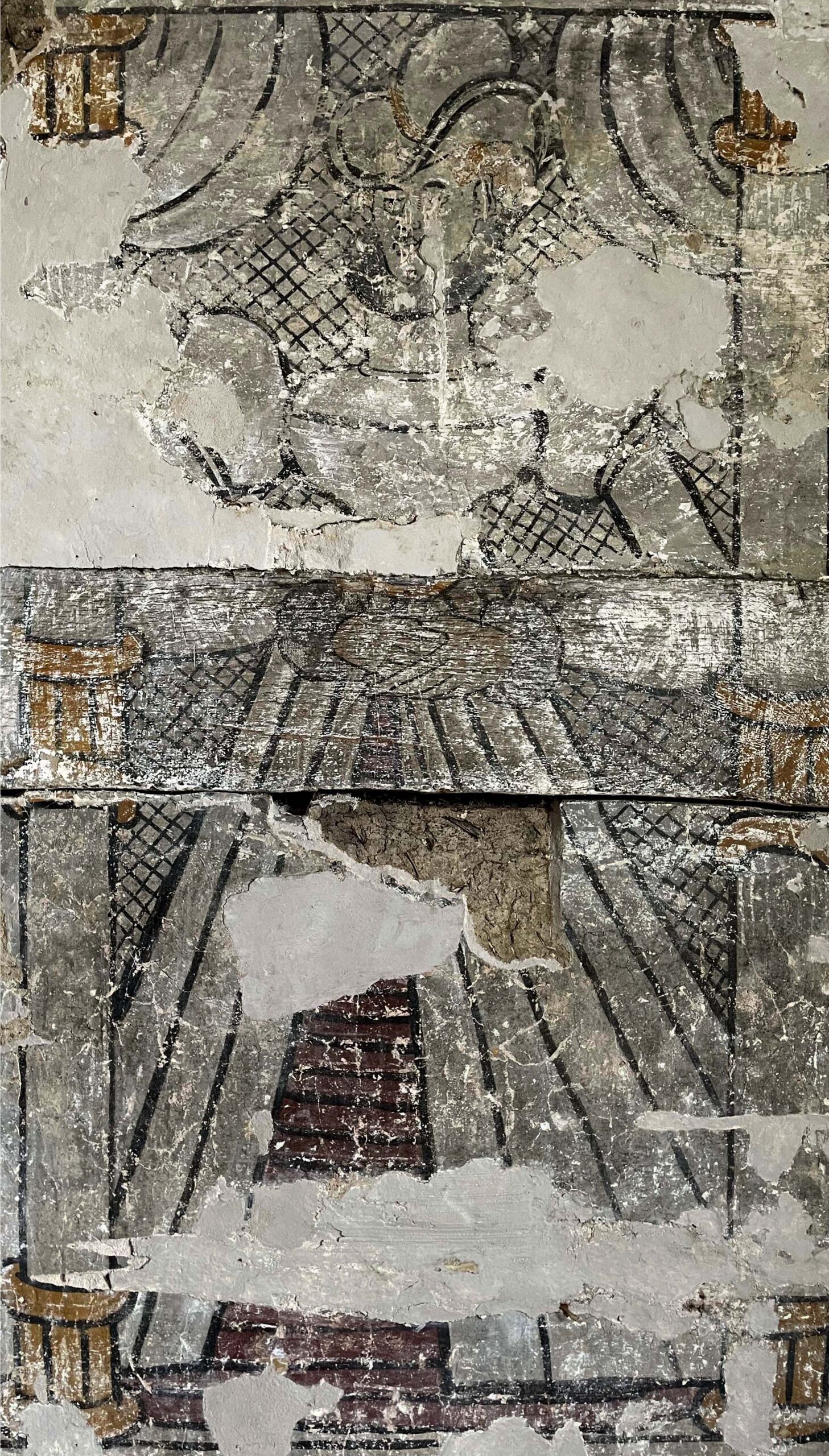
The surviving section of painting comprises a frieze decorated with scrolling and grotesque ornament; a central panel containing a male and female figure, likely to represent the original owners of the house, set within an architectural framework and separated by panels of Tudor roses; and a lower band of quatrefoils above a black skirting. The costumes of the figures enable the scheme to be dated precisely to the 1590s. Evidence within the room, and the decorative traditions of the time, suggest that painted decoration is likely originally to have extended around the room, with additional fragments potentially surviving concealed beneath later finishes.
The painting is executed on a limewash ground, over plaster panels and across the timber framing that holds them, in a palette of earth and mineral pigments typical of the period. Its relatively straightforward execution suggests that it was produced by building craftsmen working within established traditions rather than by specialist painters.
I recently undertook a phase of conservation work on this wall painting.
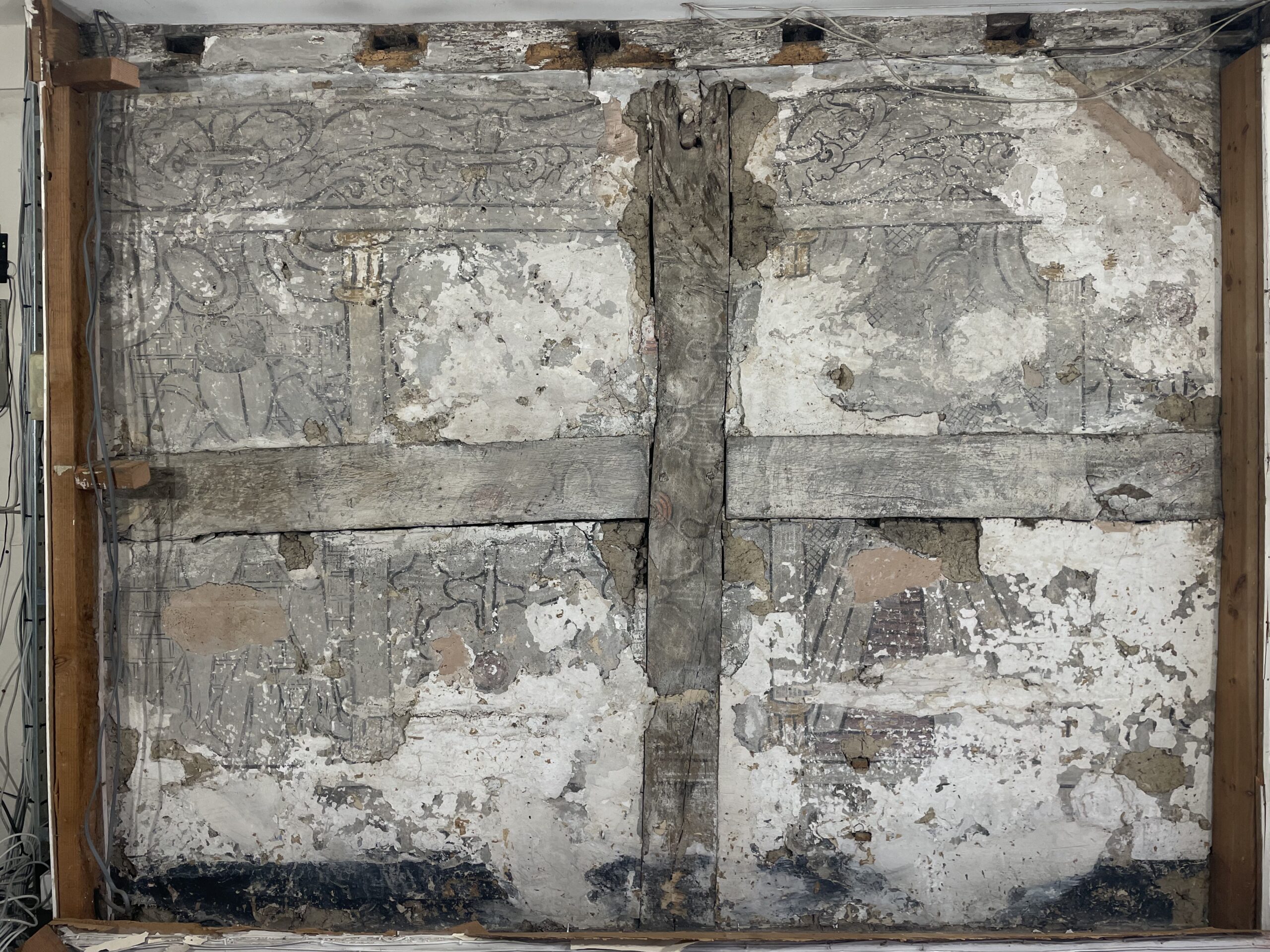
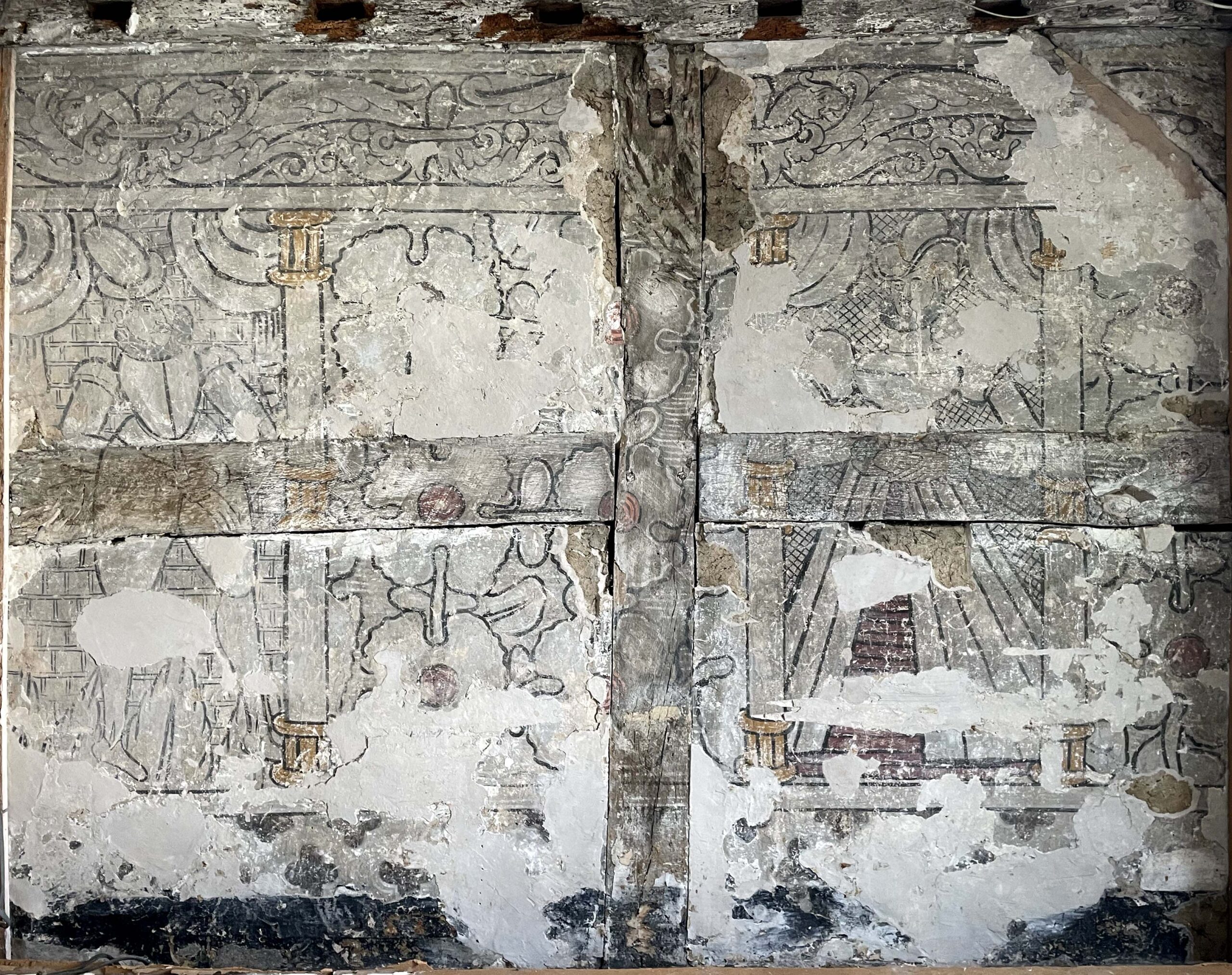
The painting before and after conservation
The wall painting had been covered by multiple layers of limewash, plaster and wallpaper, as well as a protective twentieth-century stud wall. The build up of materials reflecting the building’s continuing history and successive phases of alteration. Over time, the natural ageing and deterioration of the original materials, structural movement, environmental fluctuations and accidental damage, compounded by the presence of the later added layers, had led to considerable areas of detachment and losses within both the paint and plaster layers, leaving the scheme highly vulnerable and at risk of further destabilisation and loss.
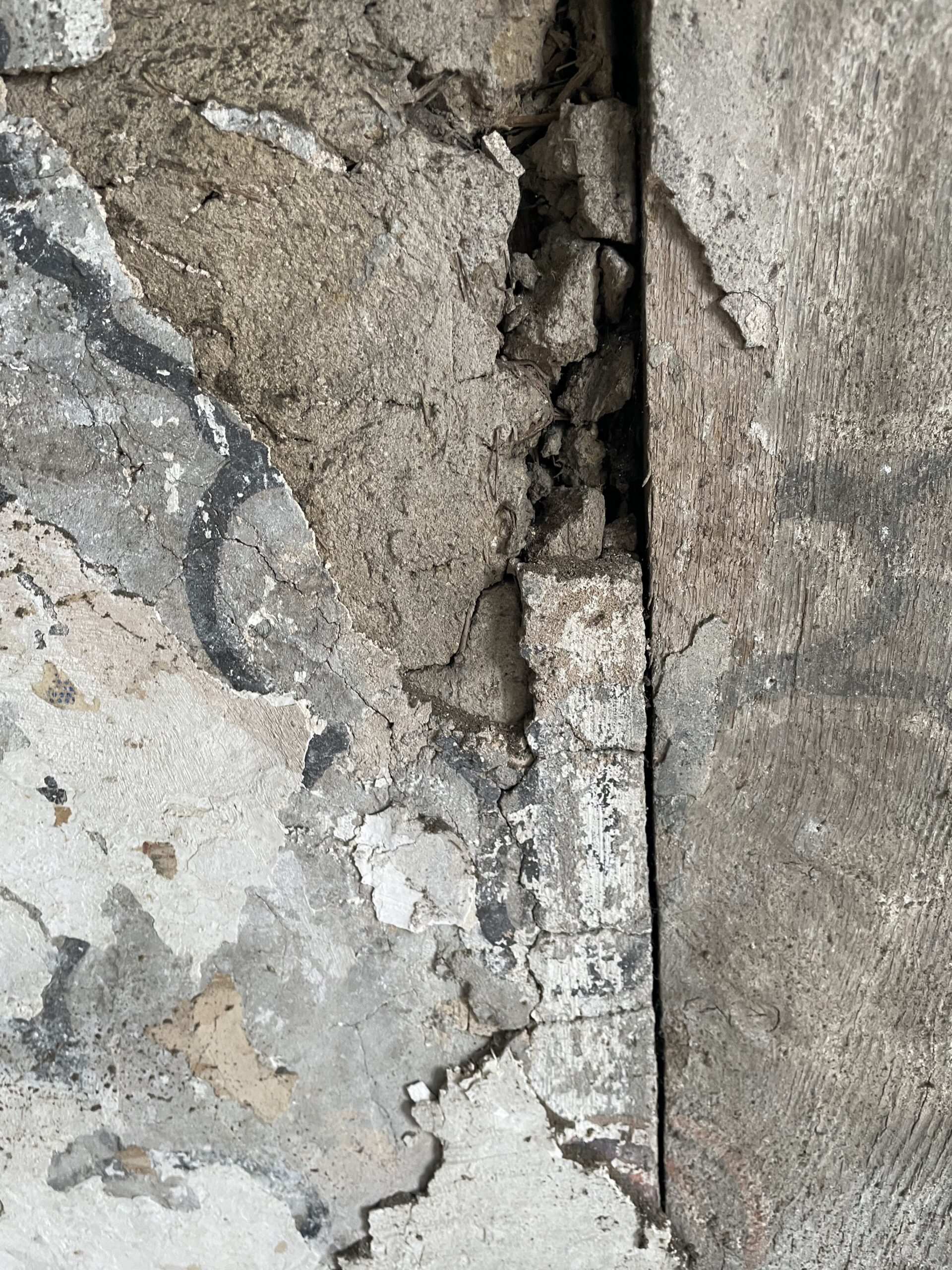
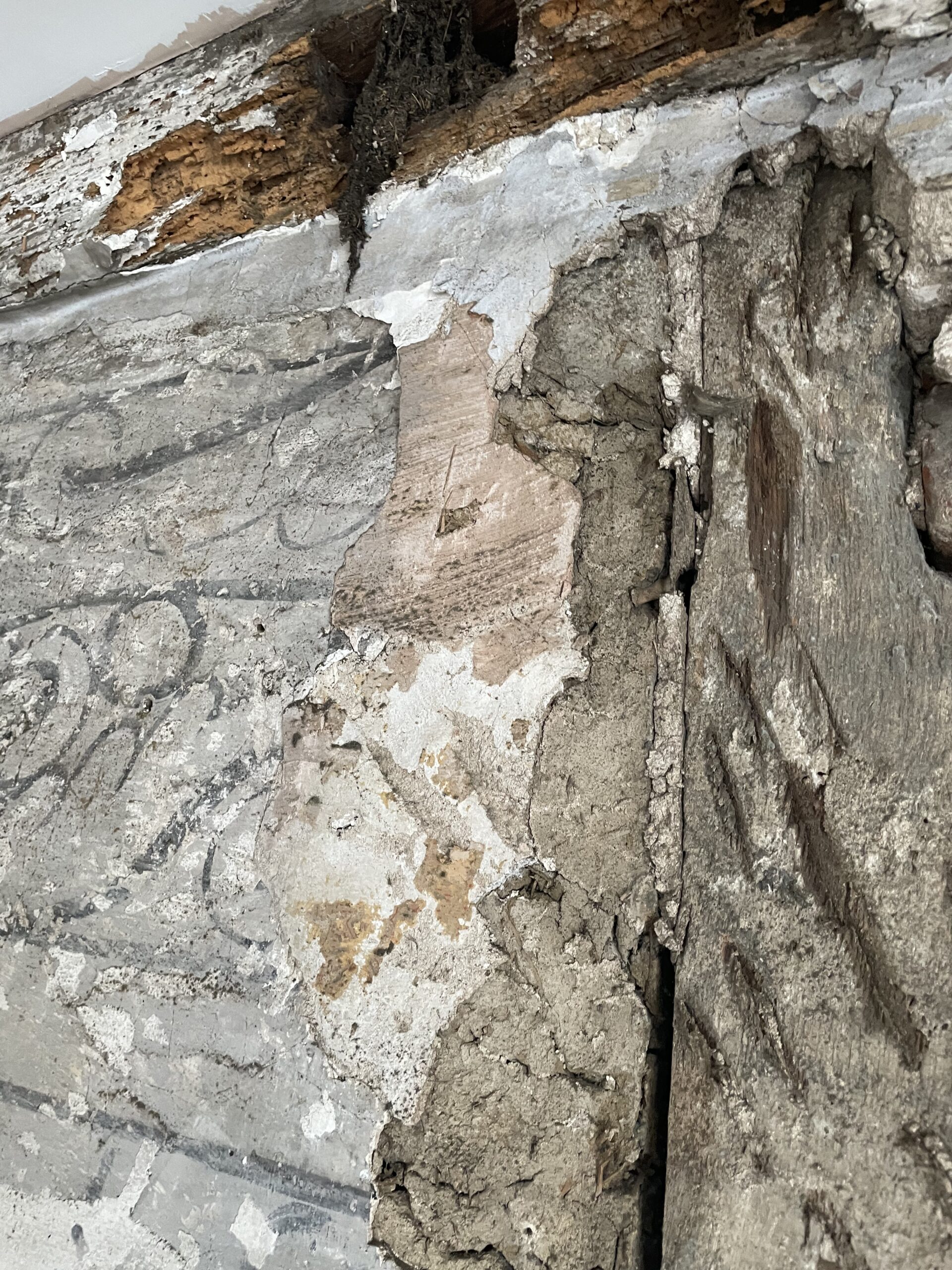
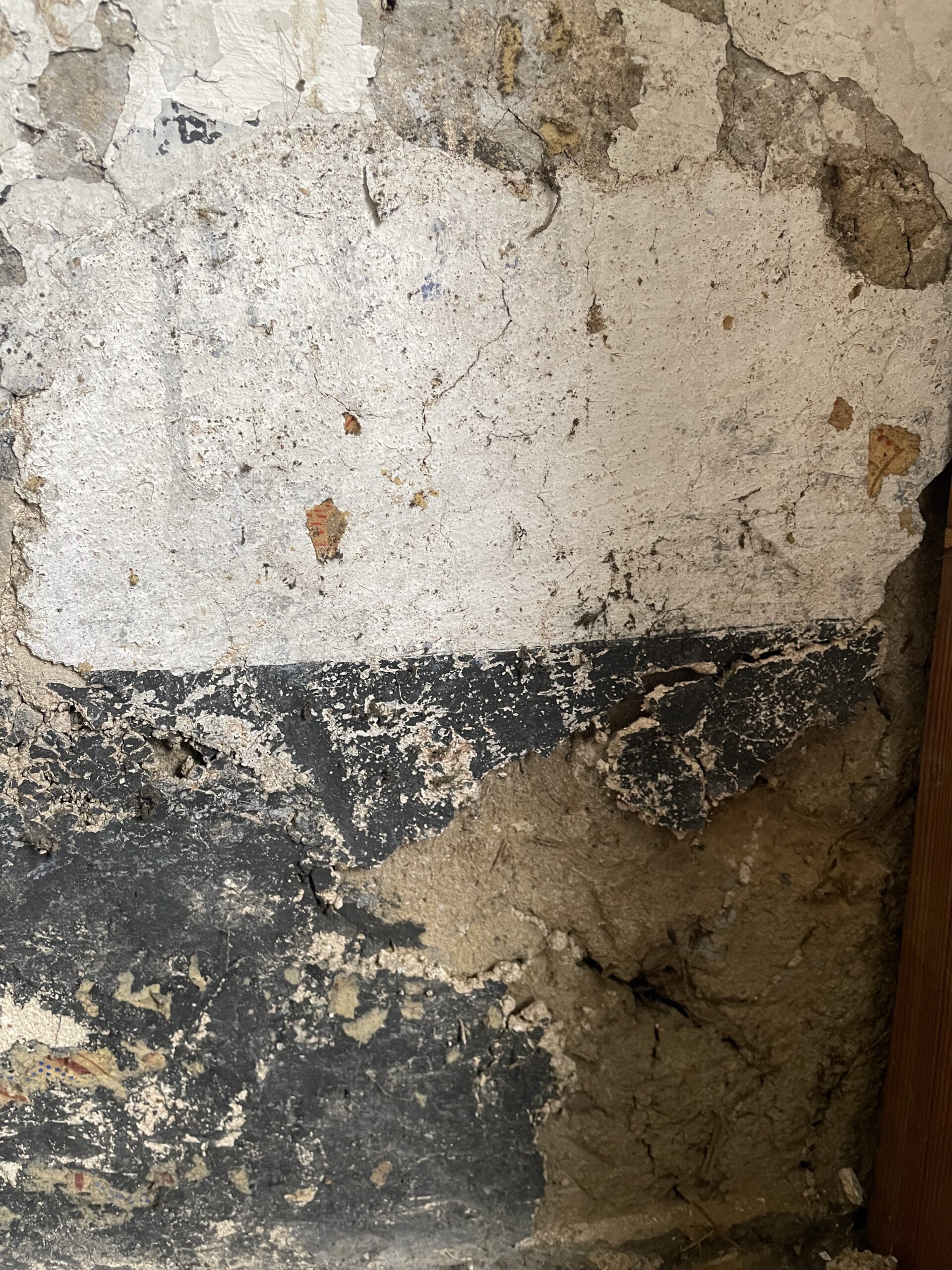
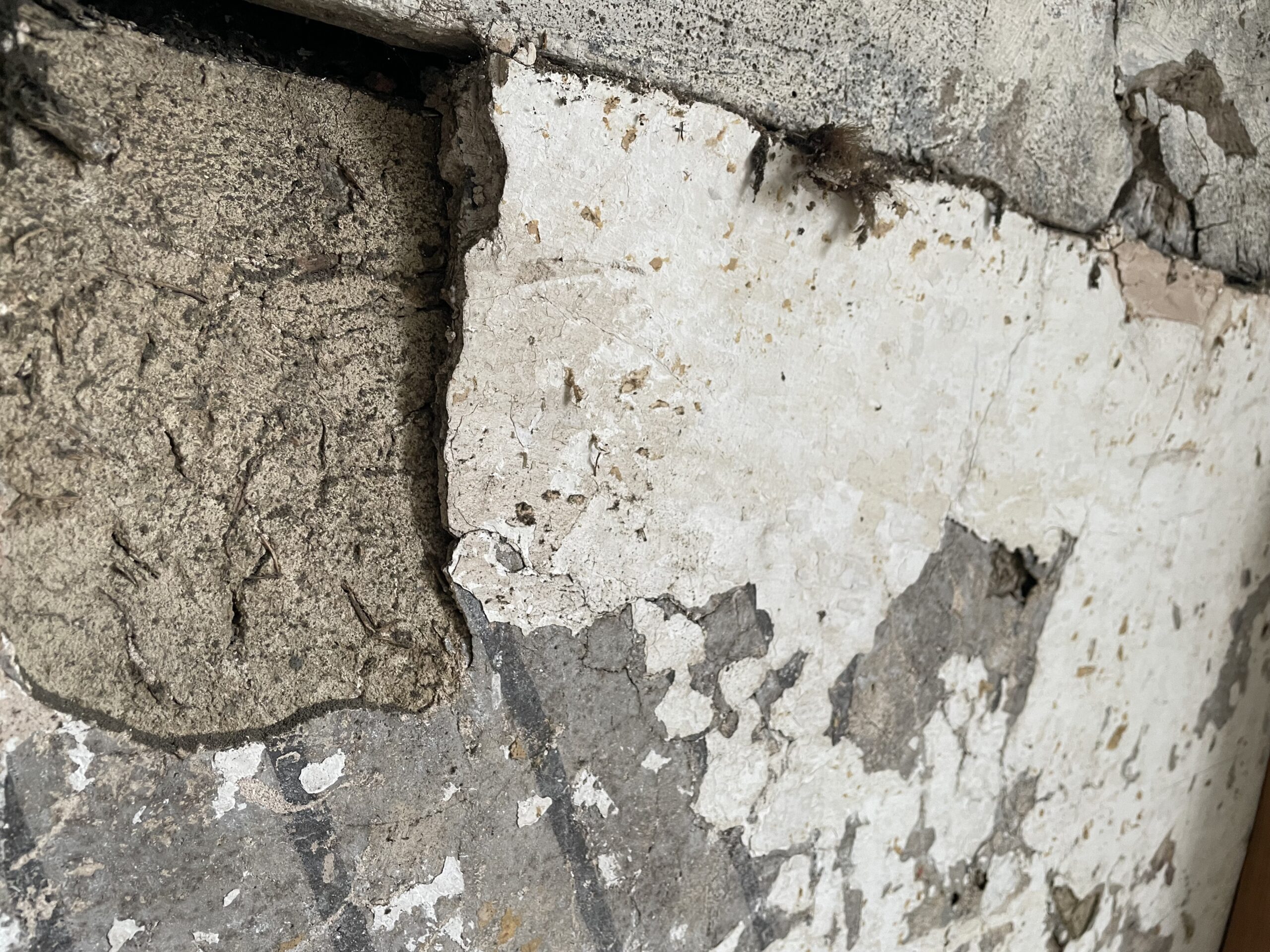
Details of areas of damage and detachment before conservation
The conservation treatment was undertaken prior to wider project of adapation and repair of the building. The work aimed to stabilise the painting, prevent further deterioration and loss, and ensure its long-term preservation. The intervention was one of stabilisation rather than full conservation involving uncovering and final presentation.
Light surface cleaning reduced accumulated deposits, improving the legibility of the painting and revealing further details, particularly in the woman’s face and dress, and in the hands of both figures. The covering materials were removed or reduced mechanically where loose, where their presence was exacerbating instability, or where necessary to enable stabilisation of the underlying original material. A previous phase of rough uncovering, undertaken principally around the figures and closely associated areas, had left residues of later limewash layers; these were reduced under magnification where appropriate, to give a clearer reading of the surfaces.
Detachment between the plaster and substrate, and between the paint and plaster layers, was secured by injecting a thin lime or lime-based grout behind the areas of separation to readhere them to the underlying material. Vulnerable edges and areas of loss were supported with lime mortar repairs. Areas of powdering paint were consolidated, and, where sections of the timber framing had evidence of historic woodworm damage, the wood was consolidated.
This treatment secured the structural stability of the painting, addressing detachment, loss and material vulnerability. Before the wider building work, the now stable painting will again be protected by a breathable panel and stud walling system incorporating a viewing panel, ensuring continued protection for the painting in the new use of the room, while allowing inspection of this extensive and rare survival from a Tudor domestic interior.
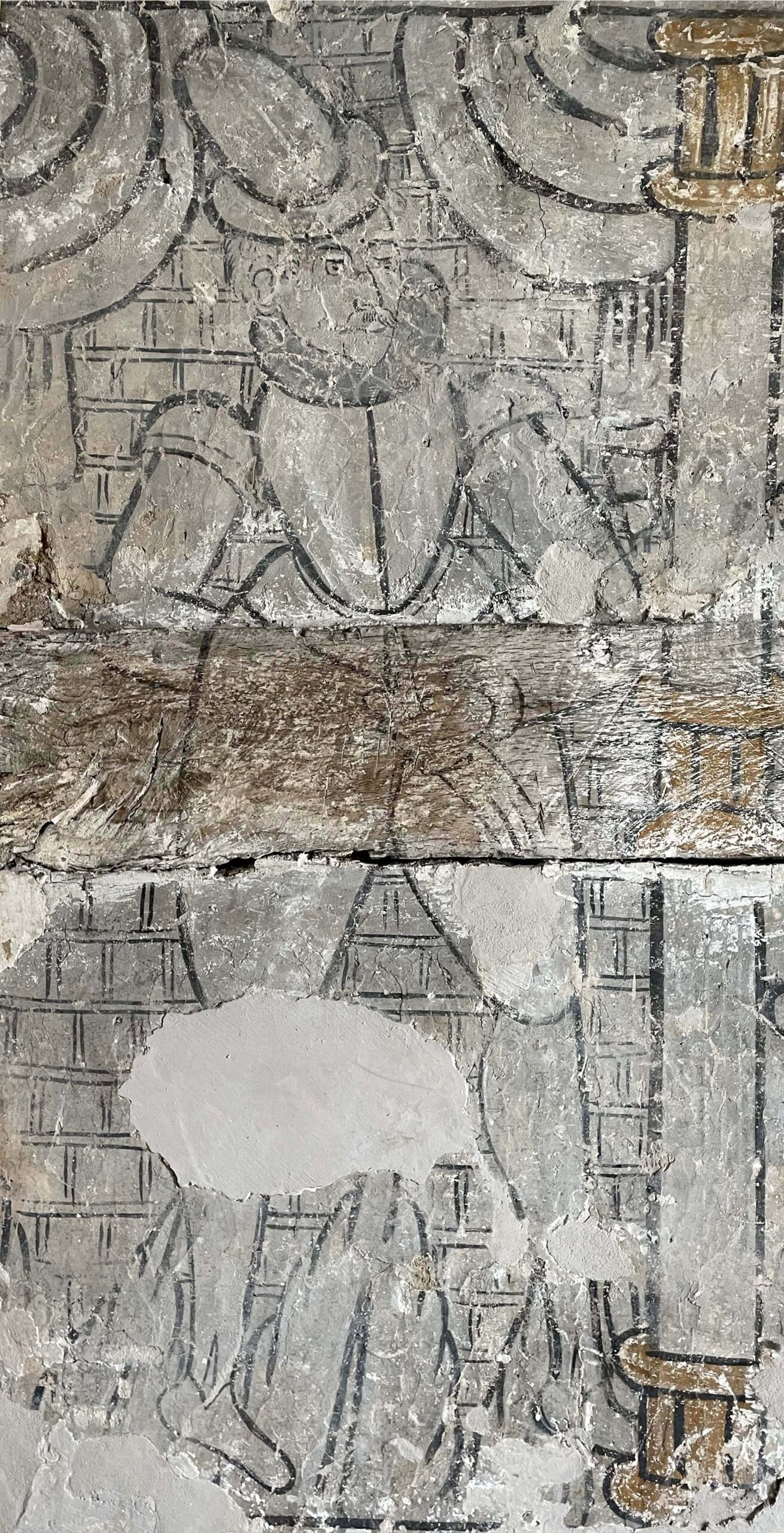
The figures after conservation
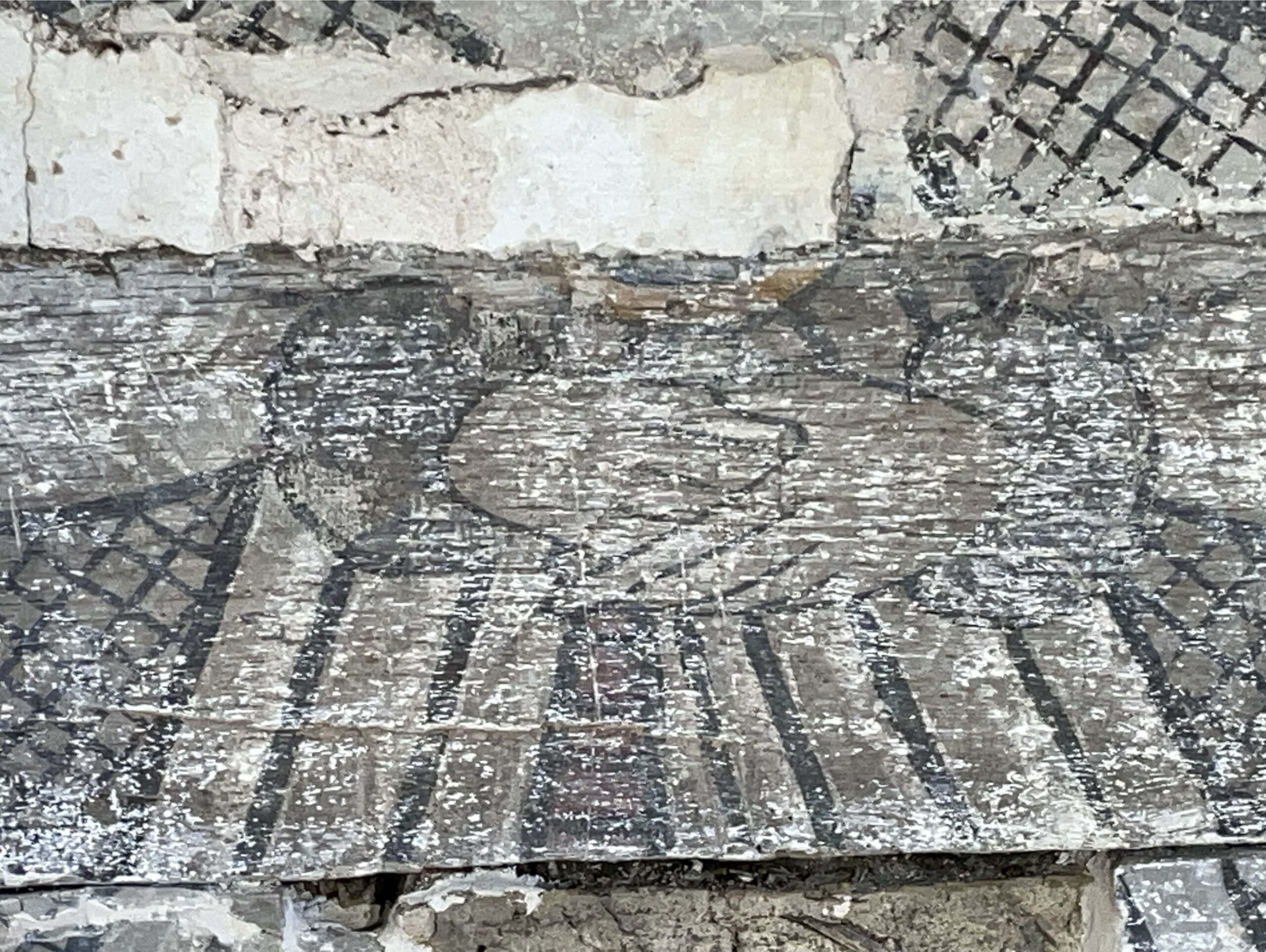
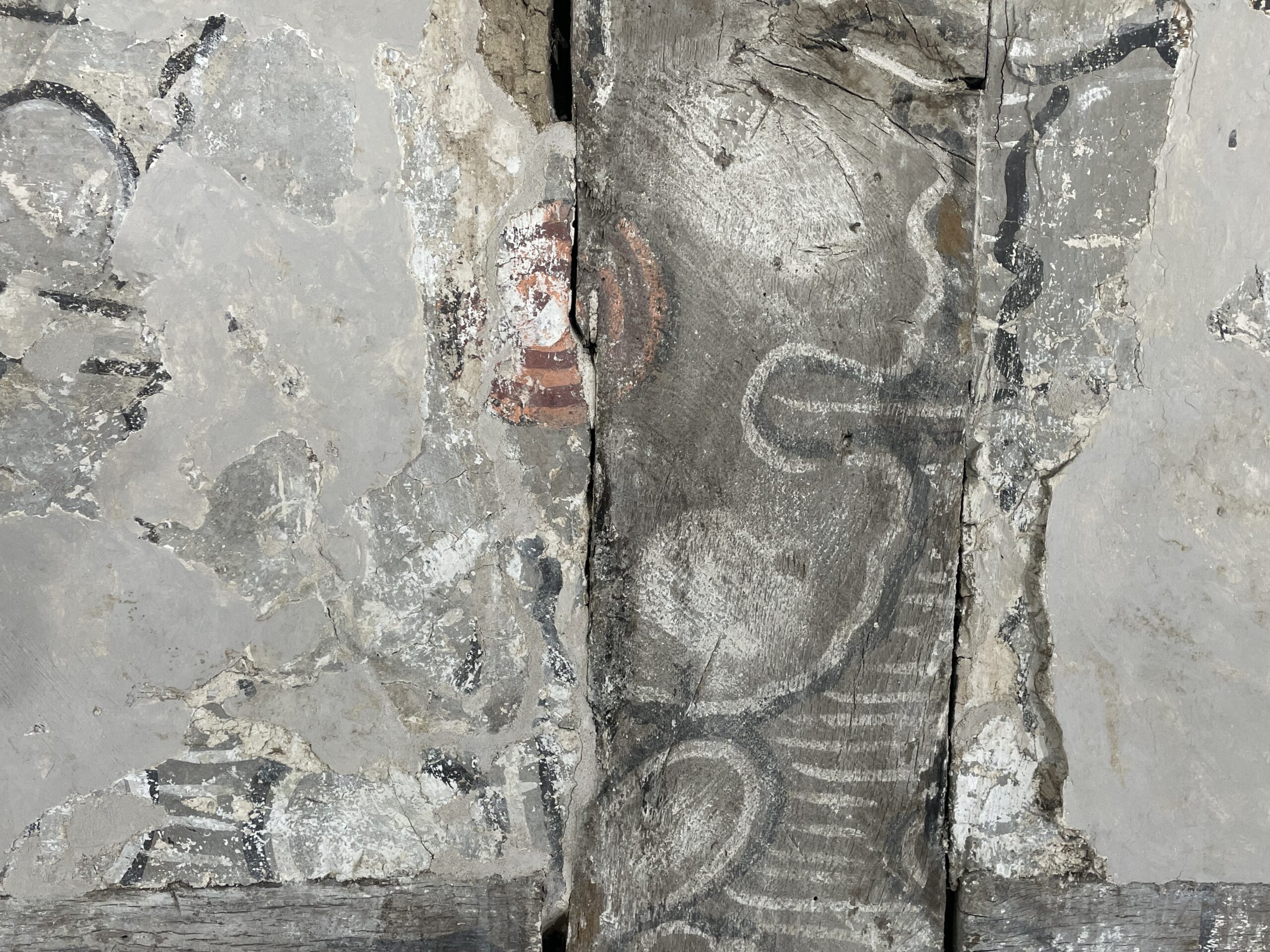
Details of the hands, and a Tudor rose, during the conservation process